
our nature is a habitat and not a garbage dump Why does garbage have no place in nature?
Because our valley is not a rubbish dump, but the living room of cows, ibexes and eagles, for example! Cigarette butts, handkerchiefs and plastic bottles fit in there just as well as flip-flops on the Widderstein. So be the hero of this story: pack up your rubbish, take it back with you and make sure that our mountains remain wild, healthy and wonderful - for you, for us and for future generations.
No matter how. No matter what. Your trash is coming with you
Watch the video and live the change! Rubbish stays by your side!
CLICK THE ANSWERS & FIND OUT! Guess what! How long does it take to rot?
Banana peel
- rotting time: half a year
- correct disposal: organic waste or compost
A banana peel takes a surprisingly long time to decompose in nature. However, if disposed of correctly, it can still be really useful: In organic waste it becomes biogas, in compost it becomes nutrient-rich soil for gardens and nature. So simply pack up the banana peel on your next hike - and dispose of it in the organic waste at home.
Cigarette butts
- rotting time: five years
- correct disposal: residual waste
A cigarette butt takes up to five years to decompose! But that's not all: when it rains, nicotine residues enter the groundwater via the surface water. Just one stub can contaminate up to 1,000 litres of water with nicotine - a neurotoxin that makes habitats dangerous for small aquatic animals. So please don't throw it away carelessly - take the stubs with you in a pocket ashtray, for example, and dispose of them in your accommodation or at home in the residual waste.
Chewing gum
- rotting time: five years
- correct disposal: residual waste
Did you know that chewing gum is largely made of plastic? This means that they not only decompose extremely slowly - they also break down into microplastics over time. This microplastic ends up in our waterways via wastewater or through abrasion and permanently pollutes the environment. So: chewing gum does not belong on the floor, but in the residual waste.
PET BOTTLE
- rotting time: 300 years
- correct disposal: deposit or plastic waste
A carelessly discarded plastic bottle remains in nature for centuries. It is still there when we are long gone - hard to imagine, isn't it? So always take empty bottles with you and dispose of them properly. This is the only way they can be recycled and turned into new products - instead of polluting our environment.
GLASS BOTTLE
- rotting time: 4,000 years
- correct disposal: glass waste
Glass remains in nature for up to 4,000 years - practically forever. What's more, glass splinters are dangerous - for humans and animals. And yet glass is easy to recycle. If you dispose of it correctly, it can be turned into a new bottle - again and again.
Events in the summer of 2026
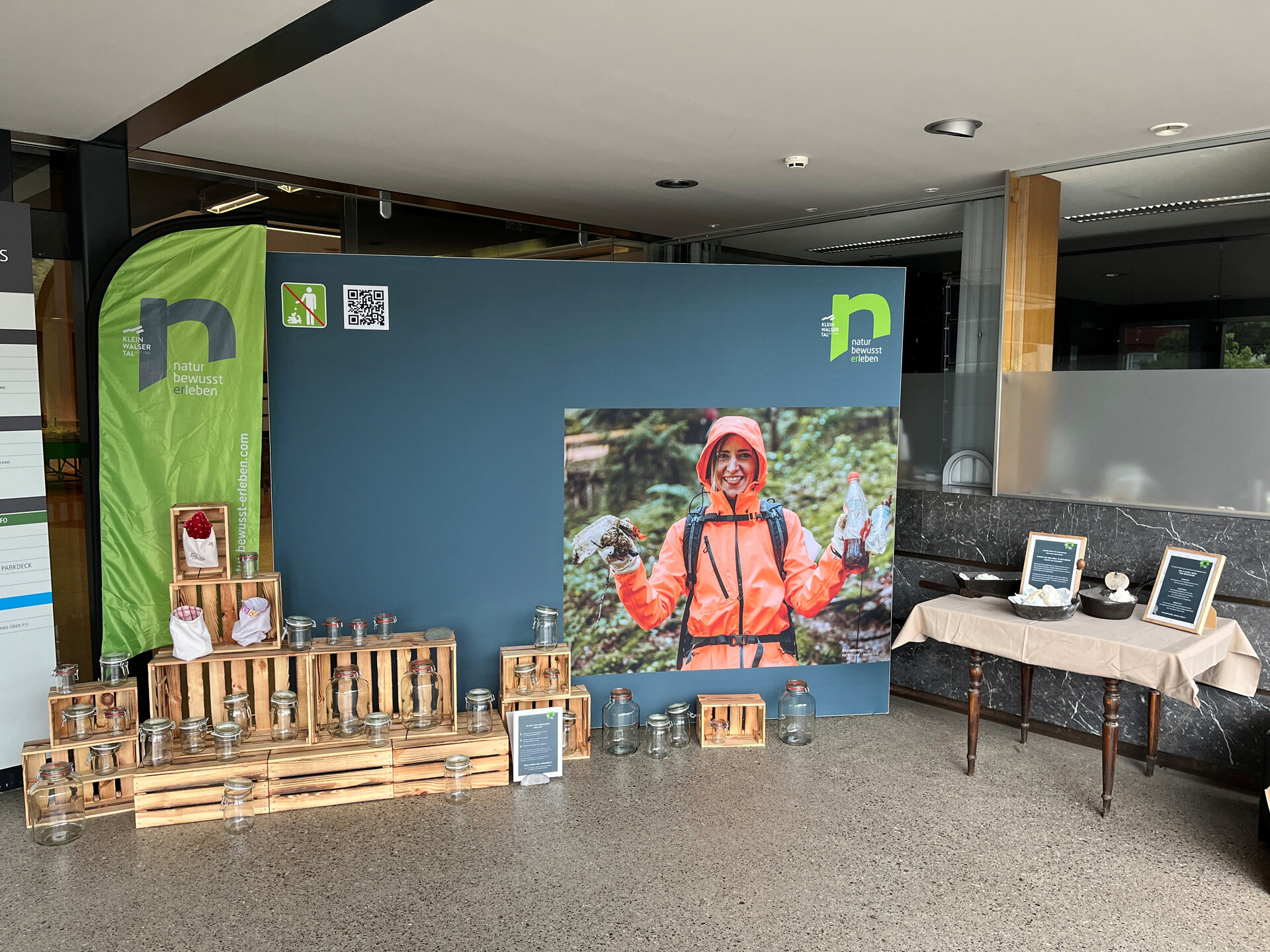
Starting on July 5, 2026, the second edition of the participatory campaign promoting mindful stewardship of our natural environment in the Kleinwalsertal will kick off. Visitors and locals are invited to collect litter in the great outdoors and thereby send a visible message in support of greater environmental awareness. The collected items will once again be displayed in mason jars, demonstrating just how much can be achieved through collective effort.
As a small token of appreciation, practical trash collection bags and pocket ashtrays will once again be available at the Tourist Information office in the Walserhaus. The campaign will also be accompanied by an interactive exhibition at the Walserhaus.
Am 05.07.2026 geht es im Kleinwalsertal wieder ans Eingemachte: Bei den CleanUp Days sind Gäste und Einheimische eingeladen zu zeigen, wie leicht Umweltschutz im Alltag gelingt – und wie viel Wumms entsteht, wenn viele gemeinsam anpacken. Der gesammelte Müll wird kreativ in Einmachgläsern sichtbar gemacht und Teil einer wachsenden Ausstellung im Walserhaus.
Als kleines Dankeschön erhalten die Teilnehmenden auch dieses Jahr wieder in der Tourist-Info im Walserhaus eine praktische Stoff-Müllsammel-Bag oder einen Taschenaschenbecher.
save the date Allgäu CleanUp Days 2026
On July 5, 2026, Kleinwalsertal will once again get down to business: During the CleanUp Days, visitors and locals are invited to show how easy it is to protect the environment in everyday life—and just how much of an impact can be made when many people work together. The collected trash will be creatively displayed in mason jars and become part of a growing exhibition at the Walserhaus. As a small token of appreciation, participants will once again receive a practical cloth trash bag or a pocket ashtray at the Tourist Information office in the Walserhaus this year.
Alpine Protection Association for Vorarlberg & Austrian Alpine Protection Association Action "Clean Alps" 2026
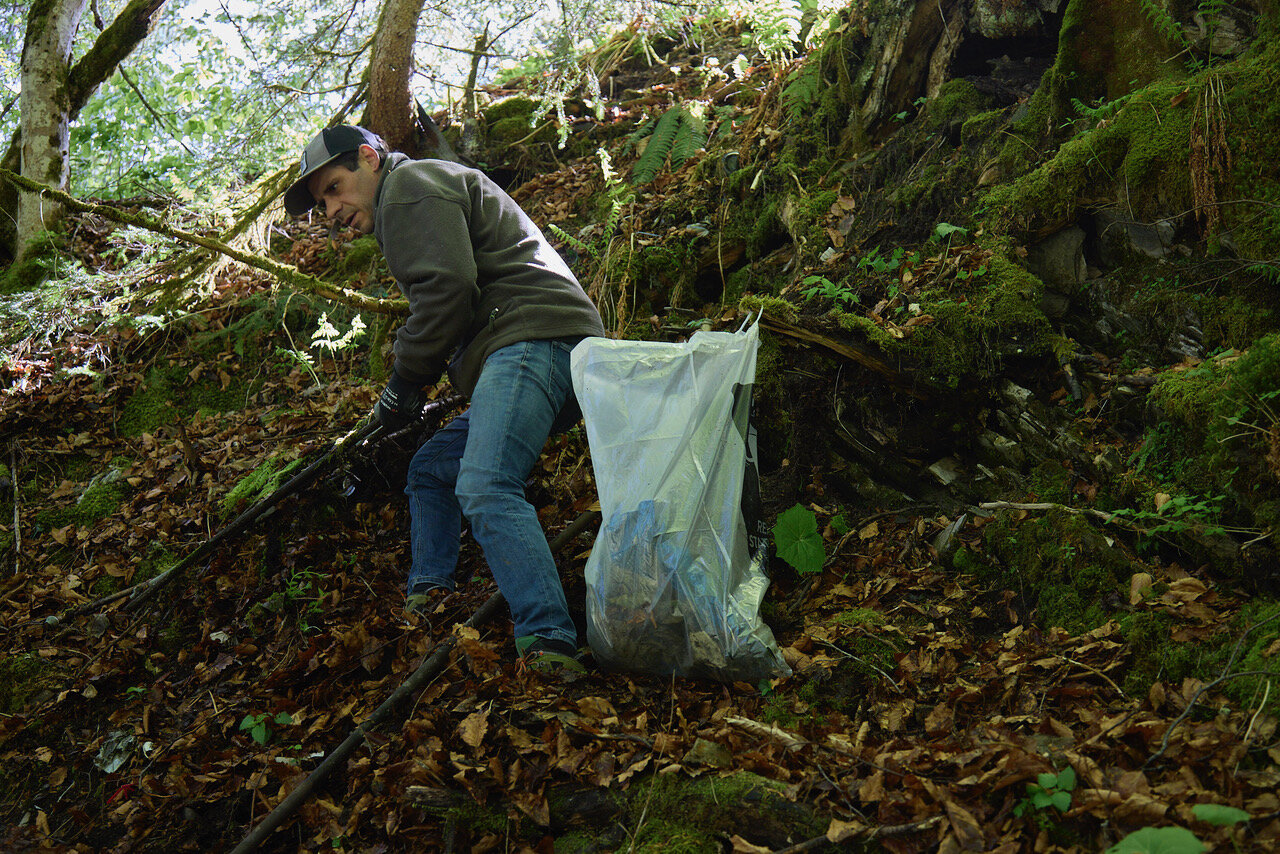
For over 50 years, the Alpine Protection Association of Vorarlberg, in collaboration with the Austrian Alpine Protection Association, has been working to protect our mountain environment through the “Clean Alps” campaign. To date, well over four million liters of waste have been collected and properly disposed of across Austria.
The campaign has now reached the Kleinwalsertal as well: Following its successful implementation on May 13, 2026, “Clean Alps” will take place again in late summer and fall. Together, we want to once again set an example for treating our natural environment with respect.
Collect rubbish together! LANDSCAPE CLEANING OF THE MUNICIPALITY
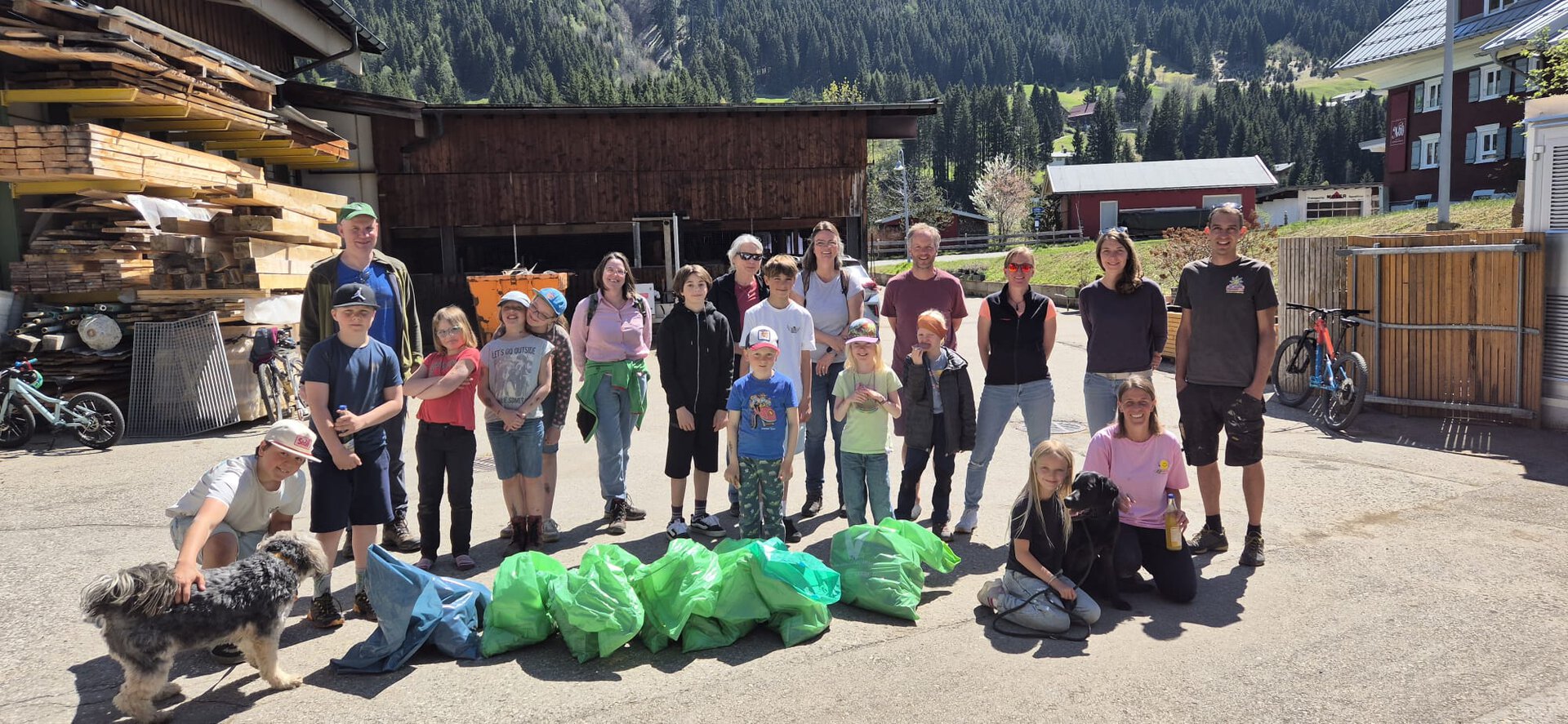
On Saturday, April 25, 2026, the “JOIN US! Landscape Cleanup” event took place in the Kleinwalsertal valley.
A total of 10 adults and 15 children participated in the community cleanup, sending a strong message in support of nature conservation. During the event, approximately 55 kilograms of trash were collected and properly disposed of.
The campaign demonstrates how important community involvement is for preserving the unique landscape of the Kleinwalsertal.


